
Create a Wallet
Understand wallets, addresses and control before creating an account.
View steps →imtoken multi-chain wallet official site
A multi-chain wallet, blockchain network and Web3 knowledge hub from imtoken
From multi-chain assets, network selection, sending and receiving to DApp connections, signatures, approvals, network knowledge and wallet security, imtoken brings common workflows and critical checks into one clear path. Understand what each step does, decide deliberately, and verify outcomes using on-chain records.
Understand wallets, addresses and control before creating an account.
View steps →Keep the seed phrase offline, avoid screenshots and never disclose private keys.
Backup guide →Verify both the receiving address and network before sharing details.
Receive guide →Review the address, network, amount and gas before submitting a transaction.
Transaction checks →Verify the domain and account request; inspect every signature and approval separately.
Connection guide →Wallet capabilities
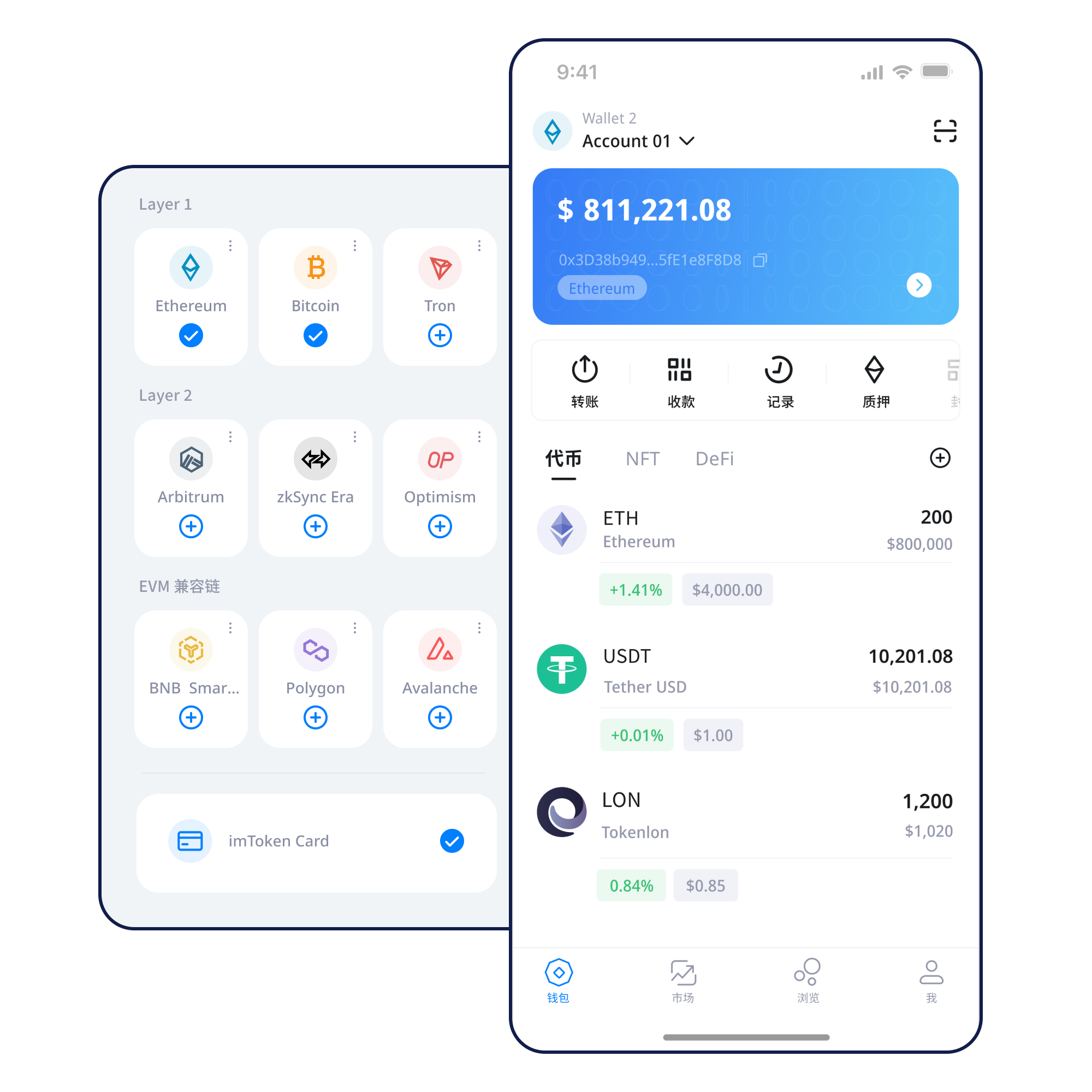
Different tasks require different information. Multi-chain assets, mobile wallet use, browser connections and security are presented with distinct structures instead of one repeated pattern.
Recognize network-specific assets, address context and confirmations. Same-name tokens can exist on different chains, so verify the network and contract information instead of relying only on a display name.
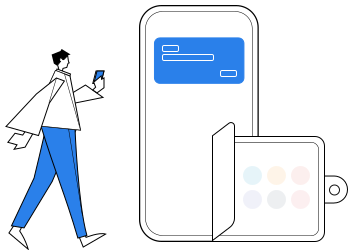
View assets, manage networks, review transaction history and access DApps from a mobile device while keeping installation source, screen lock and network environment in mind.
Check address and network when receiving; check amount, gas and transaction hash when sending. After submission, prioritize the on-chain record.
View the workflow →A browser connection creates a session, not blanket approval for future signatures. Review every signature and token approval independently.
Understand Web connections →Seed phrases and private keys remain under user control. Offline backup, address checks, approval reviews and device security work best as a repeatable checklist.
Blockchain Networks
Network selection affects addresses, gas, confirmations and asset display. All panel text remains present in the server-rendered HTML when JavaScript is unavailable.
Each chain has its own blocks, nodes, fees and confirmation rules. When switching networks, verify where the asset exists, what network the recipient supports and whether same-name tokens could be confused.
Transactions propagate through the network and are recorded in blocks. Block explorers help verify transaction hashes, block height and confirmation status.
Similar address formats and tooling can be confusing. Before transfers or approvals, verify the active chain, contract address and gas asset.
Cross-layer transfers may involve bridges, waiting periods and distinct arrival confirmations. An identical-looking address does not remove the need to verify the network.
Gas is not a fixed wallet charge. Congestion, transaction complexity and fee parameters can affect processing, while the transaction hash remains a key reference for status checks.
Learn about gas →Verify the network first, then judge fees and waiting time.
Wallet journey
A repeatable sequence makes it easier to stop, verify and continue without skipping important checks.
Use a trusted entry point to the download page and initiate downloads only through a deliberate user click.
Understand the difference between creation and import. A website should not ask you to submit a seed phrase or private key into a form.
Keep the seed phrase offline; avoid screenshots, casual cloud sync and sharing it with supposed support staff.
Confirm that the asset network matches the recipient’s supported network and that the correct gas asset is available.
Check address and network when receiving; review amount, fees and destination again before sending.
Use the transaction hash to verify the on-chain outcome and periodically review DApp approvals you no longer need.
Web3 & DApps
Verify the DApp domain and purpose before connecting. Connecting a wallet does not mean every signature request should be accepted. Each signature and approval deserves its own review.
Open the Web3 guide →Security
Seed phrases and private keys remain under user custody. Official staff will not ask for a seed phrase, private key or verification code. Verify the address, network and amount before transfers, and verify the domain, signature content and approval scope before DApp actions. Blockchain transactions are generally not reversible by a wallet provider, and third-party DApps or contracts may introduce risk.
Open Security Center →Academy
The learning path begins with addresses, seed phrases and private keys, then moves through networks, gas, transaction hashes, DApps and approvals.
Featured starter
An address is a public receiving identifier, while seed phrases and private keys relate to account control. The network determines where a transaction occurs, gas pays for on-chain execution, a transaction hash identifies the record, and DApp connections, signatures and approvals represent different levels of interaction.
Start learning →Understand blocks, nodes and confirmation counts.
Addresses, gas, contracts and token approvals.
Mainnet relationships, bridges and arrival checks.
Review approval target, amount and revocation.
Combine backup, device and transaction checks.
Learn common on-chain terms through user tasks.
Ethereum & PoS
Staking does not guarantee returns. Rewards can change, exits may involve waiting, validators may face network penalties, and smart contracts or third-party services carry technical risk.
Learn about Ethereum PoS, validators, reward sources, network state, withdrawals and exits without treating network rewards as a fixed-yield or principal-protected product.
Read the basics →Network penalties, validator state, smart-contract risk, waiting periods, asset-price volatility and third-party service risk can all affect outcomes.
Explore PoS & Validators →Product & Security Updates
When no verified date is available, use neutral labels instead of inventing partnerships, financing, licenses, user counts or market rankings.
Task-oriented navigation connects wallet, network, Web3 and security concepts more directly.
Stop any flow that asks for account-control credentials and verify the entry point again.
Verify the network, contract and recipient support before transferring.
Content pages do not reveal the final mobile download destination.
FAQ
Answers focus on practical decisions around wallet control, network selection, gas, transaction hashes, DApps and approvals.
Assets are generally recorded on the blockchain. The wallet manages account control, constructs transactions and reads network state.
Both relate to account control and should never be sent to anyone or submitted into a web form.
Similar address formats may exist on different networks, and sending through the wrong network can be difficult or impossible to recover.
Gas reflects network execution and block resources; it is not simply a fixed wallet service charge.
It identifies an on-chain transaction and can be used in a suitable block explorer to check status, block and confirmations.
No. Connection, message signing, transaction signing and token approval are different actions and should be reviewed separately.
Yes. Consider revoking permissions you no longer use and check the approval target, amount and contract address.
No. Rewards, waiting periods, validator state, network penalties and digital-asset prices can all change.
imtoken
Understand networks, addresses and security principles before managing multi-chain assets or connecting to Web3.